Vitamin C, Zinc, and Immune Health: What the Research Shows
Updated September 2026: This article was originally published about an earlier Vitali-C formulation (vitamin C, zinc, quercetin, and Proligna™ Pine Cone Extract). It has been substantially revised to reflect the current Vitali-C Plus formula and current research on vitamin C, zinc, and immune health. Some ingredients and claims discussed in the original article are no longer applicable to the current product.
Vitamin C and zinc have been associated with immune health for so long that it’s easy for the conversation to jump from “these nutrients are important to the immune system” to “taking more of them will keep you from getting sick.” The research is considerably more interesting, and more nuanced, than that.
Both vitamin C and zinc are essential nutrients with established roles in normal immune function. They’re also two of the primary ingredients in Vitali-C Plus. So what does the research actually tell us about them, particularly when it comes to the common cold?
Why Vitamin C Matters
Vitamin C is an essential nutrient and antioxidant involved in numerous functions throughout the body, including normal immune function and collagen production.1
Its relationship with the common cold has been studied for decades. Despite vitamin C’s reputation as something to reach for once a cold begins, research generally hasn’t found that taking vitamin C after symptoms start consistently shortens a cold or reduces its severity.1,2
Regular vitamin C supplementation is a little different. In the general population, it doesn’t appear to substantially reduce the likelihood of catching a cold, but regular supplementation may modestly shorten cold duration and lessen symptoms. Some research has also found a greater preventive effect in people exposed to short periods of extreme physical exertion or cold environments.1,2 So vitamin C absolutely matters to normal immune function.
Why Zinc Matters
Zinc is another essential nutrient involved in immune function. The body needs it for the development and function of immune cells, as well as for protein and DNA synthesis, wound healing, and numerous other biological processes.3 We know particularly well what happens when there isn’t enough zinc: zinc deficiency can impair several aspects of immune function and increase susceptibility to infection.3 However, that doesn’t mean continually adding more zinc makes an adequately nourished immune system progressively stronger.
Zinc has also been studied as a treatment for the common cold. A 2024 Cochrane review of randomized controlled trials concluded that zinc may shorten an ongoing cold, although the certainty of the evidence was low to very low. It appeared to make little or no difference in preventing colds, and people taking zinc reported more non-serious side effects.4
There is another important wrinkle: many of the cold-treatment studies involved zinc lozenges, often at substantially different doses and in different forms than the zinc found in a daily nutritional supplement.3,4 That’s why we shouldn’t assume every study involving “zinc” tells us what a particular zinc-containing product will do.
What About Vitamin C and Zinc Together?
This is where one of the studies I cited in the original version of this article remains interesting.
A 2012 paper reported two preliminary double-blind, randomized, placebo-controlled trials using a combination of 1,000 mg of vitamin C and 10 mg of zinc in people with common colds. In the individual studies, reductions in the duration of a runny nose did not reach statistical significance. When the researchers pooled the results from 94 participants, however, the vitamin C-and-zinc combination performed significantly better than placebo in reducing runny nose symptoms over five days, and symptom relief occurred more quickly.5
That’s a pretty cool study. One caveat: these were small preliminary trials, and the paper’s authors were affiliated with the manufacturer of the product being studied.5
What’s in Vitali-C Plus Today?
The Vitali-C formula has changed since I originally wrote this article.
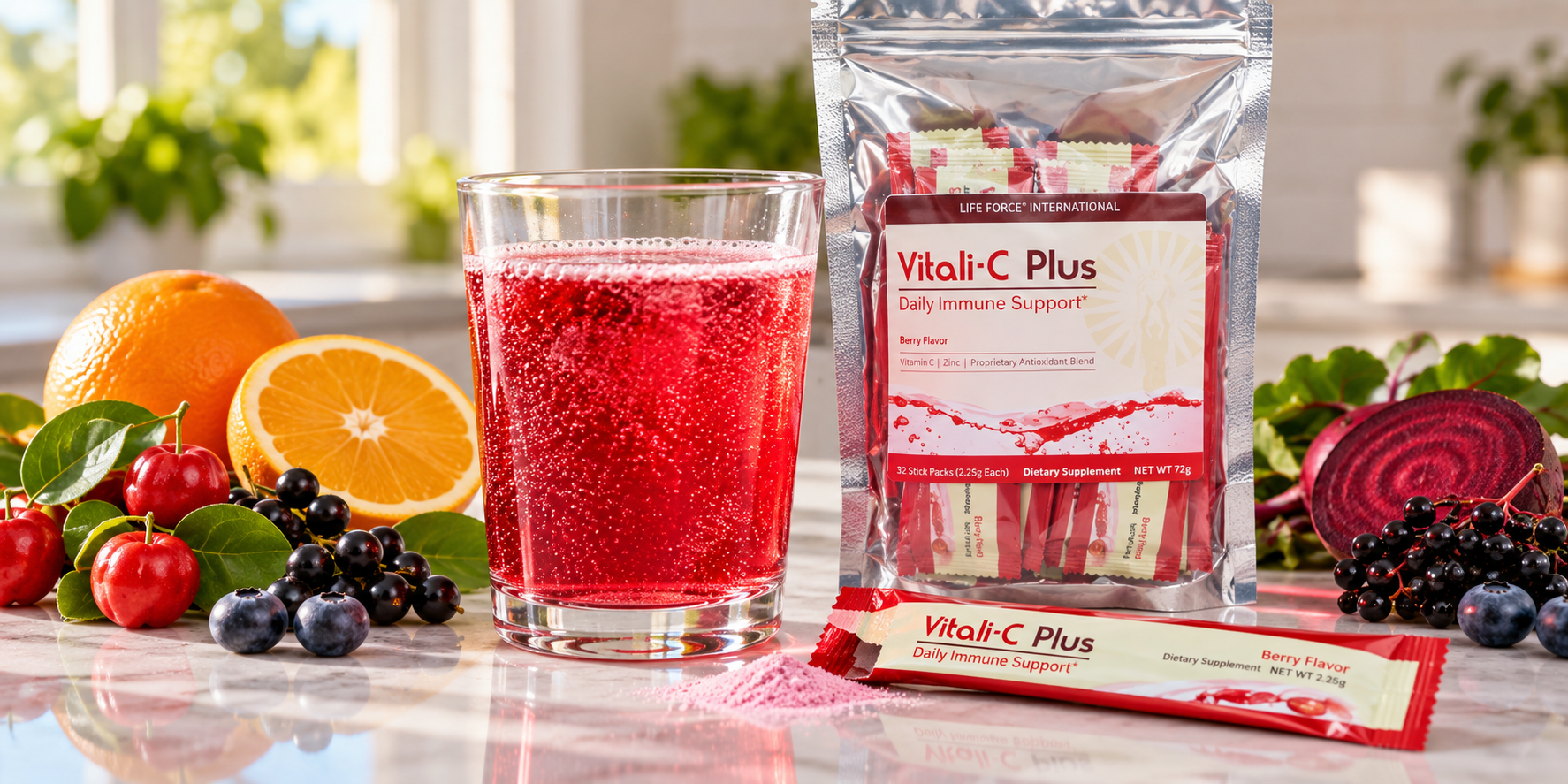
Each stick of the current Vitali-C Plus provides:
- 1,000 mg vitamin C (as ascorbic acid)
- 15 mg zinc (from zinc citrate)
- 100 mg sodium (from sodium bicarbonate)
- A 147 mg proprietary antioxidant blend containing organic acerola fruit, beet juice extract, bilberry fruit extract, black currant fruit extract, elderberry fruit extract, and quercetin
What About the Antioxidant Blend?
Acerola, bilberry, black currant, elderberry, beet, and quercetin bring a much broader range of plant compounds to the formula than vitamin C and zinc alone. These ingredients are particularly interesting for their naturally occurring polyphenols, flavonoids, anthocyanins, and other antioxidant compounds, which continue to be studied for their roles in oxidative stress, inflammation, vascular health, and immune function. Vitali-C Plus combines all six in a 147 mg proprietary antioxidant blend. But I think the combination makes sense alongside vitamin C and zinc: rather than trying to turn one plant extract into the star of the formula, it adds a variety of plant compounds to two nutrients already well established for their roles in normal immune function.
Where Does Vitali-C Plus Fit?
I don’t think we need to turn vitamin C and zinc into something magical to appreciate them. They’re essential nutrients with legitimate roles in normal immune function, and both have been studied extensively in connection with respiratory infections and the common cold. That’s enough for me to find the combination useful, and that’s why I continue to take it.
Besides, it is REALLY fun to watch it fizz when you put it in water!
1 National Institutes of Health, Office of Dietary Supplements. Vitamin C: Fact Sheet for Health Professionals.
2 National Center for Complementary and Integrative Health. Colds, Flu, and Complementary Health Approaches: Usefulness and Safety.
3 National Institutes of Health, Office of Dietary Supplements. Zinc: Fact Sheet for Health Professionals.
4 Nault D, Machingo TA, Shipper AG, et al. Zinc for prevention and treatment of the common cold. Cochrane Database of Systematic Reviews. 2024;5:CD014914.
5 Maggini S, Beveridge S, Suter M. A combination of high-dose vitamin C plus zinc for the common cold. Journal of International Medical Research. 2012;40(1):28–42.