
Is Seaweed a Good Source of Protein? What the Research Says
Seaweed has been part of the human diet for centuries, particularly in coastal cultures, but interest in it as a source of protein has grown considerably in recent years. Combined with the recent additional uptick in protein consumption, that raises an obvious question: What does seaweed protein content actually tell us about its nutritional value? The answer is more nuanced than a simple yes or no.
How Much Protein Is in Seaweed?
Seaweed does contain protein, but there is no single answer because “seaweed” describes a very large and diverse group of marine plants and algae. (I know your first thought when you hear “algae” is green pond scum, but that isn’t what I’m talking about.)
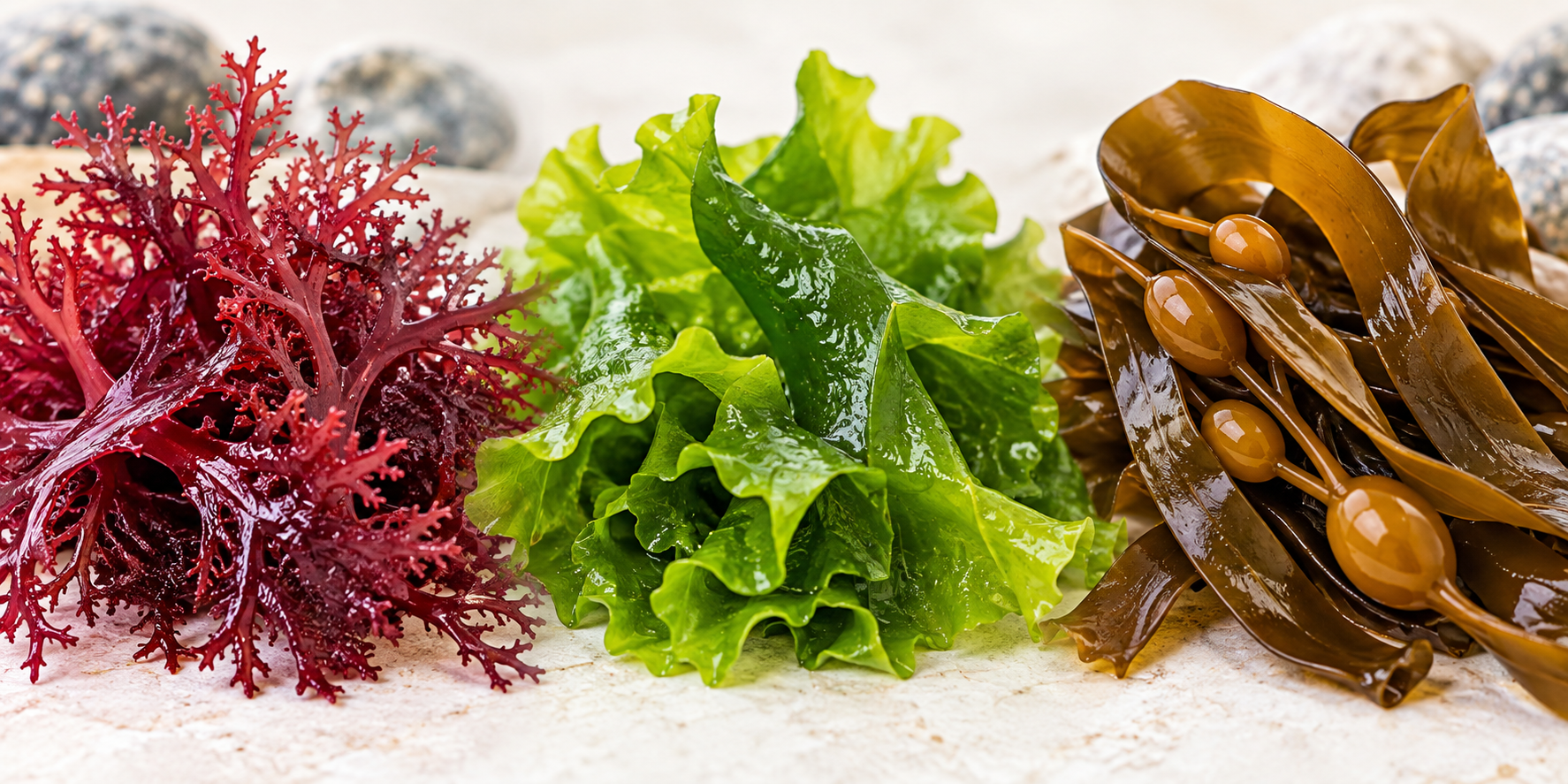
Researchers generally divide edible seaweeds into three broad groups:
- Red seaweeds
- Green seaweeds
- Brown seaweeds
Protein content can differ substantially between those groups and even between individual species within them. Growing conditions, season, harvesting time, and processing can also affect the amount of protein measured. A recent scientific review found that red seaweeds tend to have higher protein concentrations than many brown seaweeds, although there are exceptions within every group. That variability is one reason broad claims such as “seaweed is high in protein” need some qualification.
What About Amino Acids?
Protein quality depends on more than the total number of grams of protein. Proteins are made of amino acids, including nine essential amino acids that the human body cannot make on its own and therefore must obtain from food. Research shows that seaweed proteins can provide a broad range of essential amino acids. However, the proportions differ among species, and certain amino acids—particularly methionine and, in some seaweeds, histidine—may be present in lower amounts.
This means it is more accurate to say that many seaweeds have favorable essential-amino-acid profiles than to make a blanket statement that every seaweed is a “complete protein.” Different seaweed species may even complement one another nutritionally because their amino-acid profiles are not identical.
Can We Digest Seaweed Protein Well?
Valid question. Even when a seaweed contains a meaningful amount of protein, the body may not have easy access to all of it. Seaweed cells have complex walls made largely from carbohydrates and polysaccharides. Those structures can make it difficult for digestive enzymes to reach the proteins trapped inside. Researchers therefore consider digestibility one of the major limitations of seaweed protein.
However, processing can change that. Much like heating carrots makes certain nutrients more bioavailable than when they’re raw, heating, grinding, fermenting, enzymatic treatment, and other processing methods for seaweed may break down some of the structural barriers and improve protein availability. The scientific literature continues to investigate how to accomplish this without damaging the nutritional quality of the protein itself. So, as with all foods, the amount of the nutrient listed (in this case, in seaweed protein) and the amount the body can actually digest are not necessarily the same thing.
Seaweed Is More Than Protein
It is also important not to judge seaweed solely by its protein content. Seaweeds naturally contain combinations of minerals, fiber-like polysaccharides, pigments, vitamins, trace and ultratrace minerals, and other compounds that vary according to species. Modern research often looks at seaweed as a whole nutritional matrix, rather than simply as another raw material from which to isolate protein.
This distinction is useful. A serving of seaweed may not provide the amount of protein someone would expect from beans, eggs, dairy foods, fish, or a concentrated protein supplement. Its nutritional interest comes from the combination of substances it contains, rather than protein alone. It’s got a lot going for it all-around.
Why Researchers Are Interested in Seaweed Protein
Interest in seaweed protein has expanded for reasons beyond basic nutrition. Seaweed can be cultivated without agricultural land, and researchers are exploring whether it could become one component of more sustainable food systems. Scientists are also studying ways to extract and concentrate seaweed proteins for use in foods. The challenge is that seaweed protein can be difficult to separate from carbohydrates, minerals, pigments, and other compounds naturally present in the plant material. At this point, purified seaweed protein is still far less common commercially than proteins derived from soy, peas, dairy, or other established sources.
An Older Question With Newer Research
The nutritional value of seaweed protein is not a new area of study. In 1999, researcher Joël Fleurence published a short review titled Seaweed proteins: biochemical, nutritional aspects and potential uses in Trends in Food Science & Technology. The paper discussed differences in seaweed protein content, nutritional quality, digestibility, and possible food applications.
Research has advanced considerably since then. Modern reviews now examine not only protein and amino-acid composition, but also protein extraction methods, digestibility, anti-nutritional compounds, potential contaminants, allergens, processing effects, and the practical challenges of developing seaweed-based protein foods. This newer science doesn’t overturn the basic observation that seaweed can contribute useful protein; it adds a much clearer understanding of the limitations and complexities involved.
So, Is Seaweed a Good Source of Protein?
Seaweed can be a useful source of protein and essential amino acids, but the answer depends heavily on the type of seaweed and how it is consumed or processed.
Some species contain substantially more protein than others. Amino-acid profiles vary. Digestibility may be limited by the seaweed’s cell structure, and normal serving sizes are often too small for seaweed to function as someone’s primary protein source. This makes seaweed better viewed as an interesting and potentially nutritious component of the diet rather than simply another high-protein food. And as research continues, scientists are learning more about how seaweed proteins can be processed, concentrated, and potentially incorporated into future foods.
Why This Research Matters to LiquidWholeFood
Seaweed research has been part of LiquidWholeFood’s educational material for many years because several nutritional products we have carried contain marine plant ingredients. One example is Body Balance, a whole-food nutritional supplement that includes a blend of seaweeds among its ingredients.
Our interest has never been in turning a single nutrient or ingredient into a miracle story. We prefer to understand why ingredients are used, what the research actually says, and where the evidence still has limitations. And, as the science evolves, we periodically revisit older research and update the information we provide. That is why this article relies primarily on newer scientific reviews while still acknowledging the earlier research that helped establish interest in seaweed proteins.
References
Ghelichi S, Jacobsen C. Seaweed Proteins: Properties, Extraction, Challenges, and Prospects. Journal of Food Science. 2025;90(7):e70418.
O’Brien R, Hayes M, Sheldrake G, et al. Macroalgal Proteins: A Review. Foods. 2022;11(4):571.
Fleurence J. Seaweed proteins: biochemical, nutritional aspects and potential uses. Trends in Food Science & Technology. 1999;10(1):25–28.
Research and Health Information: Research references are provided for educational purposes. Citation of a study, author, journal, or research institution does not imply endorsement of LiquidWholeFood or any product sold or discussed on this site. The information provided in this article is for educational purposes only and is not intended as medical advice or as a substitute for advice from a qualified healthcare professional. It is not intended to diagnose, treat, cure, or prevent any disease.