Why Are Preservatives Used in Some Liquid Supplements?
People who read nutrition labels eventually run into a dilemma. You find a product whose main ingredients you like, perhaps fruits, vegetables, herbs, or other whole-food ingredients, and then you work your way down the label and find potassium benzoate or potassium sorbate.
Well, that’s disappointing.
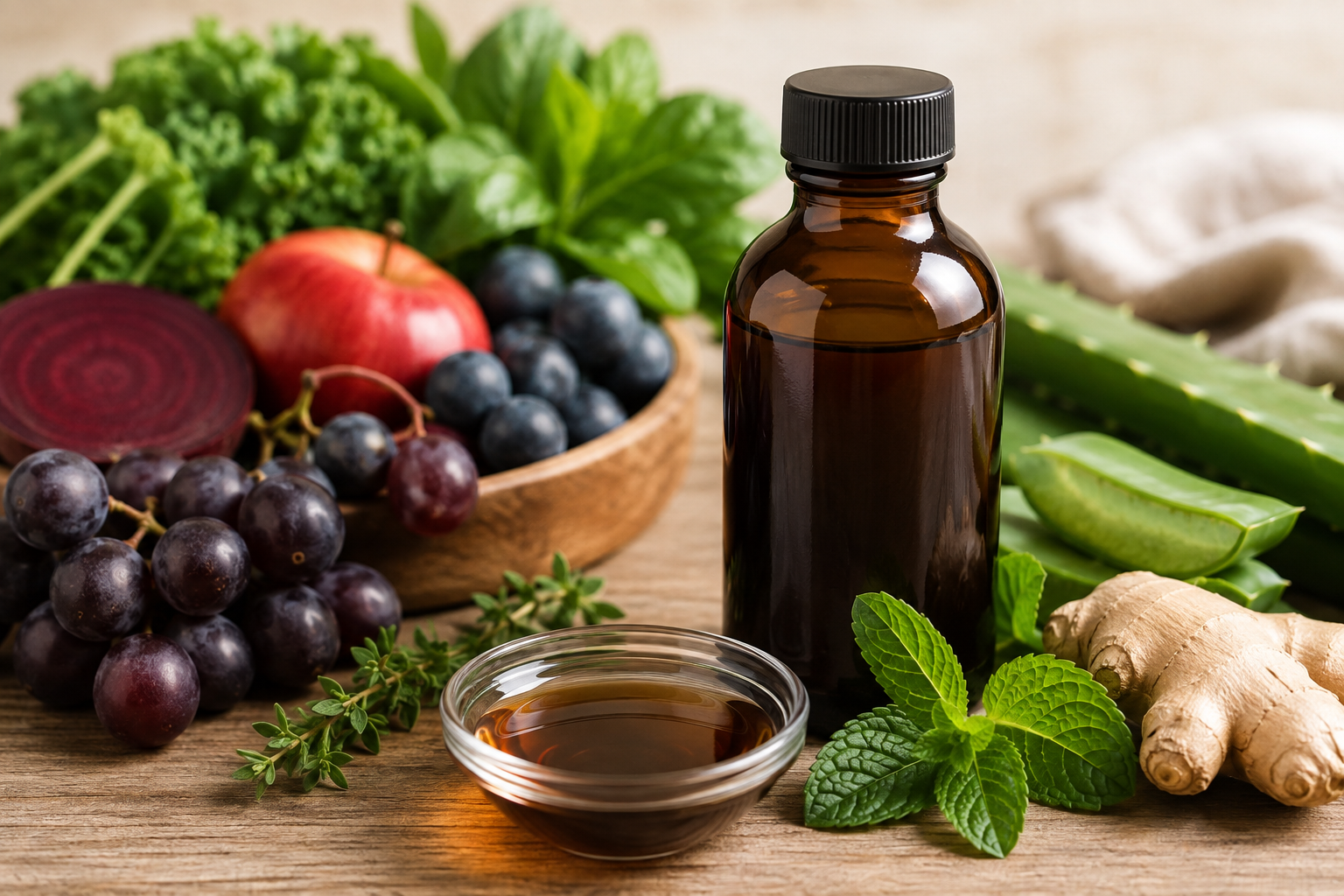
I would prefer that they weren’t there, too. However, I also understand why a manufacturer might use them, particularly in a liquid product made from food ingredients. Fruits, vegetables, herbs, aloe, and other botanical ingredients don’t magically stop being perishable because someone puts them into a supplement bottle. They are subject to the same problems with yeast, mold, bacteria, and deterioration that affect the foods in our kitchens.
That leaves us with one of those annoying situations in nutrition where the choice isn’t between something good and something bad. Sometimes we’re choosing between competing concerns, neither of which we can completely eliminate.
Why Preserve Something Made from Food?
One of the reasons I prefer whole-food nutrition is precisely because it is made from foods and food-derived ingredients rather than relying entirely on isolated nutrients. That creates a practical problem, though. Food spoils.
The FDA describes preservatives as ingredients used to prevent or slow spoilage caused by bacteria, molds, fungi, and yeast, as well as to help maintain freshness. In a shelf-stable liquid product, controlling those organisms isn’t merely a matter of keeping the product looking or tasting nice. Microbial growth can become a food-safety issue.
Of course, there are ways to formulate and package products that reduce the need for particular preservatives, and manufacturers have choices available to them. Those choices may affect the manufacturing process, nutritional quality, shelf life, storage requirements, taste, packaging, and ultimately the price of the product. I am not a food chemist, and I don’t pretend to know what formulation would work best in a particular manufacturer’s laboratory. I can only evaluate the product they actually make.
That means I sometimes find myself wishing they had made a different choice while still understanding why they made the one they did.
What About Potassium Benzoate?
Benzoates deserve some additional discussion because there is a legitimate reason people have heard about them.
The FDA has investigated benzene formation in beverages containing benzoate salts and ascorbic acid (Vitamin C). Under certain conditions, particularly involving heat and ultraviolet light, very low levels of benzene can form. Since benzene is a known carcinogen, this isn’t something I think we should wave away with an assurance that everything is perfectly safe. On the other hand, it doesn’t follow that a product containing a benzoate and vitamin C is therefore delivering a dangerous dose of benzene.
During its testing of beverages, the FDA found that the great majority contained either no detectable benzene or levels below 5 parts per billion, the federal standard established for benzene in drinking water. When products were found with elevated levels, the FDA worked with manufacturers on reformulation, and the affected products were reformulated or discontinued.
There is another distinction worth making. Much of the discussion online concerns sodium benzoate, probably because it is so commonly used. Potassium benzoate is another benzoate salt. Substituting potassium for sodium does not make the underlying chemistry disappear, so I don’t think it would be accurate for me to reassure someone that potassium benzoate has nothing to do with the benzene question.
This is a real issue. It’s more complicated than “benzoate + vitamin C = benzene = cancer.”
Sometimes We Have to Pick Our Poison
My family has heard me use the expression “pick your poison” for years. Obviously, I don’t mean that I believe we should knowingly eat poison. I mean that sometimes we have to weigh the disadvantages of one choice against the disadvantages of another. Nutrition is full of those decisions.
Fresh produce is generally a wonderful choice, but it can carry pathogenic bacteria. Organic farming reduces the use of certain pesticides, but “organic” doesn’t mean pesticide-free. Cooking can destroy harmful microorganisms, while some cooking methods can also produce compounds we would rather minimize or cause the loss of some nutrients. A food can provide nutrients we want while also containing something we would prefer to limit.
If our standard becomes, “I will consume this only if no one can identify any possible drawback associated with it,” we are going to have a difficult time finding dinner.
This was really the point of my old Patty Perfecteater story. Poor Patty knew just enough about every possible nutritional hazard to talk herself out of eating anything at all. It was deliberately ridiculous, but the tendency it poked fun at is real. We can become so intent on making the perfect nutritional choice that we lose our ability to make sensible ones. I don’t want to do that with supplements, either.
Looking at the Product as a Whole
When I evaluate a product, I don’t give it a pass simply because I like its major ingredients. Neither do I automatically reject it because there is one ingredient on the label that I wish weren’t there. I want to know why that ingredient is present, what purpose it serves, how significant the concern about it actually is, and what I would be giving up by rejecting the product because of it. Then I look at the formulation as a whole.
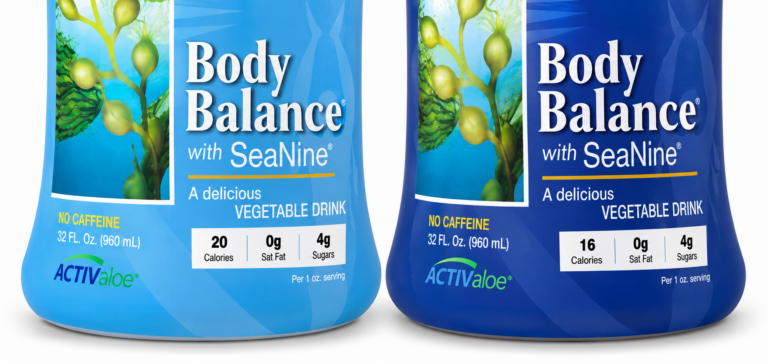
There will be times when an ingredient tips the balance for me and I decide not to carry a product. There will be other times when I decide that the benefits of the overall formulation outweigh my reservations about a particular ingredient. That is the case with some of the liquid supplements I carry, including Body Balance, where I think the overall formulation still earns its place despite ingredients I would prefer not to see.
Would I be happier if a manufacturer could give me the same whole-food ingredients, the same safety and stability, the same reasonable shelf life, and approximately the same price without using potassium benzoate or potassium sorbate? Certainly. But that isn’t the choice sitting in front of me.
Read the Whole Label, but Keep Reading
I encourage people to read ingredient labels. In fact, I wish more people did. I just don’t think we should stop reading as soon as we encounter the first ingredient that concerns us. Look it up. Find out why it’s there. Find out whether the frightening thing you heard about it is established science, a theoretical possibility, a problem that occurs under particular conditions, or something that has been repeated so many times online that nobody remembers where the claim originated. Then put that information back into context and decide whether the product, taken as a whole, makes sense for you.
Sometimes the answer will be no, and that’s perfectly reasonable.
Other times, we may have to accept something less than nutritional perfection in order to get something we believe has substantial value. That’s not ignoring the ingredient list; it’s what an ingredient list is supposed to help us do: make an informed choice.
Sources
Types of Food Ingredients, U.S. Food and Drug Administration
Questions and Answers on the Occurrence of Benzene in Soft Drinks and Other Beverages, U.S. Food and Drug Administration
Determination of Benzene in Soft Drinks and Other Beverages, U.S. Food and Drug Administration
Potassium Benzoate, Substances Added to Food, U.S. Food and Drug Administration
Potassium Sorbate, Substances Added to Food, U.S. Food and Drug Administration
Research and Health Information: Research references are provided for educational purposes. Citation of a study, author, journal, or research institution does not imply endorsement of LiquidWholeFood or any product sold or discussed on this site. The information provided in this article is for educational purposes only and is not intended as medical advice or as a substitute for advice from a qualified healthcare professional. It is not intended to diagnose, treat, cure, or prevent any disease.