Bone Health After 50
For most of our lives, we don’t give our bones much thought. They hold us up, we take them everywhere we go, and unless one of them breaks, they are remarkably undemanding. Then menopause arrives, and our bones apparently decide they would like some attention.
The good news is that bone loss isn’t something we simply have to watch happen. Nutrition, exercise, lifestyle habits, and appropriate screening can all play a role in protecting bone health as we age. And while calcium certainly matters, keeping our bones strong after 50 involves quite a bit more than drinking milk or taking a calcium supplement.
Your Bones Are Still Alive
It’s easy to picture a skeleton as the solid framework underneath everything else, something rather like the lumber holding up a house. But bone is living tissue, and it is constantly changing. Throughout our lives, old bone is broken down and new bone is built to replace it. This process is called bone remodeling. When we’re young, we generally build bone faster than we lose it. Later, the two processes become more balanced. After about age 50, however, bone breakdown can begin to outpace bone formation, particularly around menopause.1
Estrogen is one reason. Among its many jobs, estrogen helps regulate the cells involved in bone remodeling. When estrogen levels drop during menopause, bone resorption (the breakdown side of the remodeling process) increases. The result can be a faster loss of bone density.1,2 That doesn’t mean every woman develops osteoporosis after menopause. It does mean that this is a particularly important time to start paying attention to the bones we’ve been taking for granted.
Calcium Matters, But It Isn’t the Whole Story
If you were asked to name one nutrient associated with bones, I’m guessing calcium would win by a landslide. There’s a good reason for that. About 99 percent of the calcium in our bodies is stored in our bones and teeth, and calcium is an important part of the structure that gives bones their strength.3
Women age 51 and older are generally advised to get 1,200 mg of calcium per day from food and supplements combined.1,3 The combined part matters. A supplement doesn’t automatically need to contain 1,200 mg of calcium if you’re already eating calcium-rich foods.
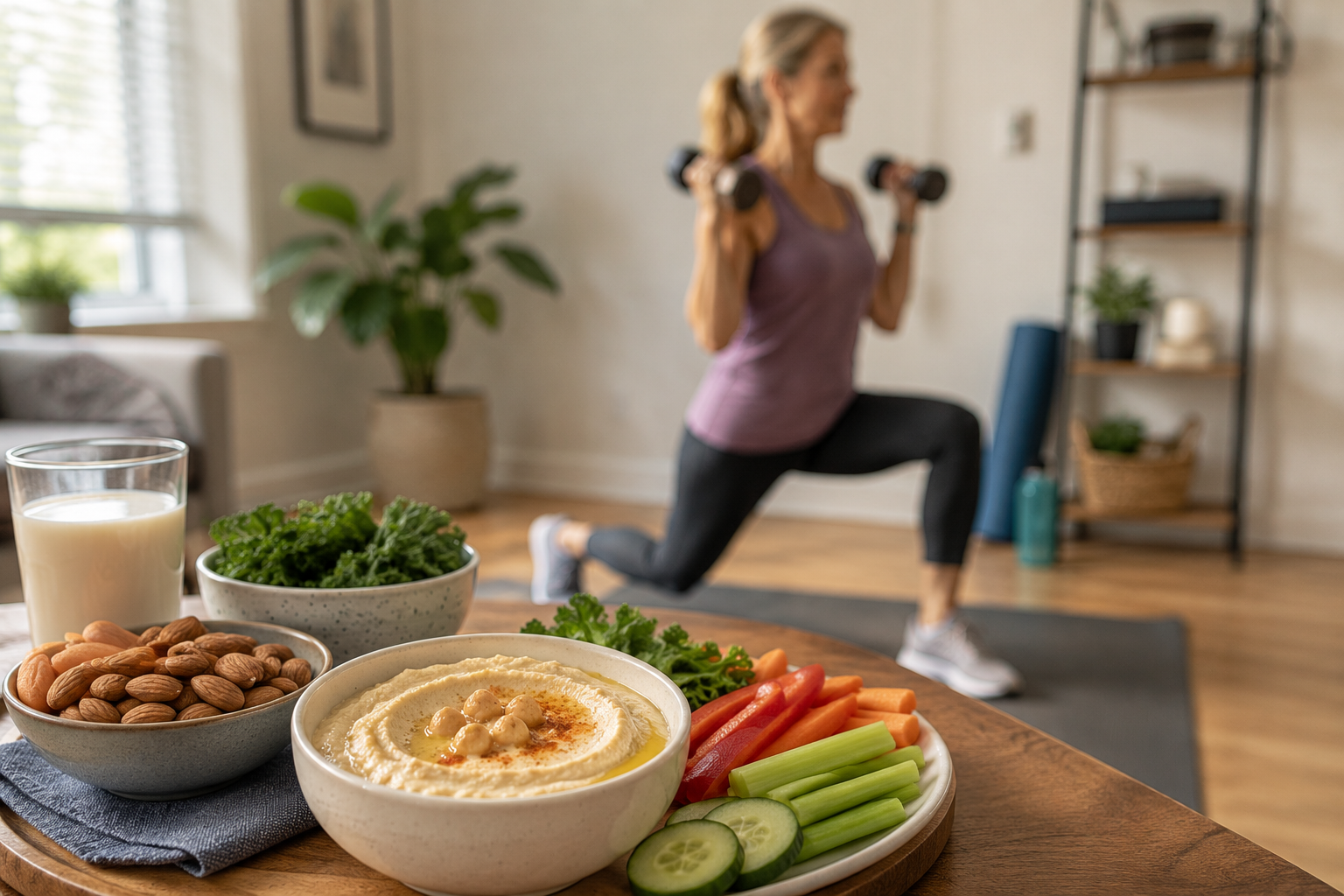
And those foods aren’t limited to dairy products. Depending on what you eat, calcium can come from foods such as kale and other leafy greens, calcium-set tofu, beans, almonds, fortified plant milks, and other fortified foods.1,4 Reading labels can be surprisingly useful here, particularly with plant milks because calcium content varies by brand. In other words, the goal isn’t to swallow as much calcium as possible. The goal is to get enough.
Vitamin D Helps You Use the Calcium You Eat
Getting calcium into your mouth is only part of the job. Your body also has to absorb it, and that’s where vitamin D becomes important. Vitamin D helps the intestines absorb calcium and plays an important role in maintaining appropriate calcium levels in the body. Without adequate vitamin D, eating plenty of calcium doesn’t necessarily mean your body can make the best use of it.1,3
Vitamin D is a little trickier to obtain from food than calcium because relatively few foods naturally contain substantial amounts. Fortified foods can help, and our bodies can produce vitamin D when skin is exposed to sunlight. Age, season, latitude, skin pigmentation, time spent outdoors, and other factors can affect how much we produce, though, so this is one nutrient for which supplementation may sometimes make sense.
Research on calcium and vitamin D supplements isn’t as simple as “take these and you won’t get osteoporosis.” Studies have produced different results depending on the population, doses, foods, supplements, and outcomes being studied. A systematic review of randomized controlled trials in postmenopausal women, for example, found some benefit from combined calcium and vitamin D, including a reduction in hip fractures, while the effects on bone mineral density varied.5 That makes calcium and vitamin D important, but not magic.
The Supporting Cast
Calcium and vitamin D get most of the publicity, but bones aren’t made from two nutrients. Bone formation and remodeling involve a much larger collection of vitamins, minerals, proteins, hormones, and other compounds.
Magnesium is one example. Much of the magnesium in the body is stored in bone, where it contributes to bone structure and is involved in processes that regulate bone formation and breakdown. Vitamin K is involved with proteins important to bone mineralization. Zinc contributes to collagen formation and bone-building activity. Copper, manganese, and other trace minerals also participate in processes involved in maintaining bone tissue.2,6
This is one of the reasons I prefer thinking about foods rather than trying to construct a healthy skeleton one nutrient at a time. Leafy greens, beans, nuts, seeds, whole grains, fruits, vegetables, and other nutrient-rich foods bring combinations of nutrients to the table. Calcium may get top billing, but it isn’t performing a one-woman show.
Don’t Forget Protein
Protein sometimes gets left out of conversations about bone health because we tend to associate it with muscles. But bone isn’t simply a chunk of calcium. Its structure includes a protein matrix, largely made from collagen, upon which minerals are deposited. Adequate protein therefore matters to the skeleton as well as the muscles surrounding it. Research on nutrition and postmenopausal bone health supports adequate protein intake as part of maintaining bone and muscle as we age.
There is another practical reason to care about muscle. Stronger muscles help with strength, mobility, and balance. A strong skeleton is certainly desirable, but preventing the fall that might fracture a bone is pretty useful too. So beans, lentils, soy foods, nuts, seeds, and other protein-rich foods aren’t just “muscle foods.” Protein belongs in the bone-health conversation as well.
Your Skeleton Would Like You to Pick Up Something Heavy
Nutrition gets a lot of attention in discussions about osteoporosis, but bones respond to what we do with them too.
Weight-bearing activity makes your bones work against gravity. Walking, climbing stairs, dancing, and similar activities put mechanical stress on bone, which helps stimulate the remodeling process. Resistance exercise adds another useful challenge because muscles pull against bones as they work.1,4
That doesn’t mean a 65-year-old woman who hasn’t exercised in years should suddenly start jumping onto boxes because someone on the internet said impact builds bones. Exercise needs to be appropriate for your fitness level and, if you already have osteoporosis or a high fracture risk, some movements may not be appropriate for you.
But bones were designed to be used. Regular walking, appropriate resistance training, and activities that help maintain balance and strength give them a reason to keep adapting.
What About Supplements?
This is where things can get unnecessarily polarized. One camp acts as though everyone over 50 needs a shelf full of supplements. Another insists that if your diet is good enough, supplements should never be necessary. If only human biology were that convenient.
Food is my preferred starting point because foods provide combinations of nutrients rather than isolated substances. But nutritional needs and circumstances differ. Someone may have difficulty getting enough calcium from her diet. Vitamin D can be difficult to obtain adequately from food alone, especially if our jobs keep us indoors most of the day. Dietary restrictions, medications, absorption problems, appetite changes, and other factors can also affect nutritional status. That’s where supplements belong: supplementing what you need, not replacing a good diet.
More isn’t necessarily better, either. The Bone Health & Osteoporosis Foundation specifically recommends trying to meet calcium needs through food and supplementing only as needed to reach the recommended amount. Taking calcium beyond what you need provides no additional benefit and may carry risks.3
The same basic principle applies more broadly. Identify the nutritional gap first. Then decide whether a supplement is a sensible way to fill it.
Know What’s Happening Inside Your Bones
One of the unsettling things about osteoporosis is that you can’t feel your bones becoming thinner. Osteoporosis is often called a silent disease because the first obvious sign may be a fracture.1 A DEXA (or DXA) scan measures bone mineral density and can identify low bone density before a fracture occurs. Routine bone-density screening is generally recommended for women beginning at age 65, while younger postmenopausal women may need earlier screening if they have additional risk factors.1,4
Those risk factors can include a previous fracture after age 50, low body weight, a family history of osteoporosis or hip fracture, smoking, certain medical conditions, and medications that can contribute to bone loss.1,4 Knowing your bone density doesn’t make your bones stronger by itself, of course. It gives you information. And information is considerably more useful before the broken hip than after it.
Start Now, Not Perfectly
There is a temptation with health information to read an article like this, mentally inventory everything you’ve done wrong for the past 30 years, and conclude that fixing it will require a new diet, a gym membership, six supplements, and a personality transplant. It doesn’t.
Have some calcium-set tofu with dinner. Add beans to soup. Put greens into something you’re already cooking. Check the calcium and vitamin D on the label of your plant milk. Take a walk. Do some resistance exercises appropriate for you. Eat enough protein. If you’re over 65, ask whether you’re due for a bone-density test. If you’re younger but have risk factors, ask whether you should have one sooner.
Bone health after 50 isn’t about finding one perfect food, nutrient, supplement, or exercise. It’s about giving living tissue what it needs, consistently, over time. Our bones have quietly supported us for decades. Paying a little more attention to supporting them in return seems like a reasonable arrangement.
Looking for bone-health support?
If you’re having trouble getting enough of some of these nutrients through food alone, you can explore the Bone & Joint products I’ve chosen to carry. Supplements aren’t a substitute for a bone-healthy diet or appropriate exercise, but they can help fill nutritional gaps when food alone isn’t getting you there.
References
- Osteoporosis: What You Need to Know as You Age, Johns Hopkins Medicine
- Nutrition-Based Support for Osteoporosis in Postmenopausal Women: A Review of Recent Evidence, International Journal of Women’s Health
- Calcium and Vitamin D, Bone Health & Osteoporosis Foundation
- Surprising Foods That Boost Bone Health, Harvard Health Publishing
- Effects of Combined Calcium and Vitamin D Supplementation on Osteoporosis in Postmenopausal Women: A Systematic Review and Meta-Analysis of Randomized Controlled Trials, Food & Function
- Beyond Calcium & Vitamin D: The Role of Vitamin K, Magnesium, Zinc, and Other Trace Minerals in Bone Health, National Osteoporosis Foundation of South Africa
Research and Health Information: Research references are provided for educational purposes. Citation of a study, author, journal, or research institution does not imply endorsement of LiquidWholeFood or any product sold or discussed on this site. The information provided in this article is for educational purposes only and is not intended as medical advice or as a substitute for advice from a qualified healthcare professional. It is not intended to diagnose, treat, cure, or prevent any disease.